
World Boxing Association (WBA)
The World Boxing Association - commonly abbreviated WBA - is one of the longest-running sanctioning lineages in professional boxing. Its story is often told as a continuous path from the National Boxing Association (NBA), founded in 1921, through a 1962 rename that established the WBA name used today.
This page is an independent educational overview. It is not an official WBA publication and does not list invented current champions, rankings or fight records.
From NBA (1921) to WBA (1962)
Understanding the WBA begins with the National Boxing Association. The NBA emerged in the early twentieth century as a U.S.-centered attempt to coordinate championship recognition across a fragmented professional landscape.
National Boxing Association
The NBA is widely cited as the institutional predecessor of the modern WBA. Its purpose was championship recognition and coordination among affiliates, not event promotion.
Rename to World Boxing Association
In 1962 the organization adopted the World Boxing Association name, reflecting a broader international framing of championship recognition as boxing's commercial and geographic reach expanded.
Multi-organization era
As other sanctioning bodies formed - notably the WBC (1963), IBF (1983) and WBO (1988) - WBA titles became one strand among several parallel championship systems.
Championship structure concepts
Like other sanctioning bodies, the WBA recognizes world titles by weight division. Exact internal labels, secondary designations and policy details can change over time; this site describes evergreen concepts rather than a live rulebook.
Belts and recognition
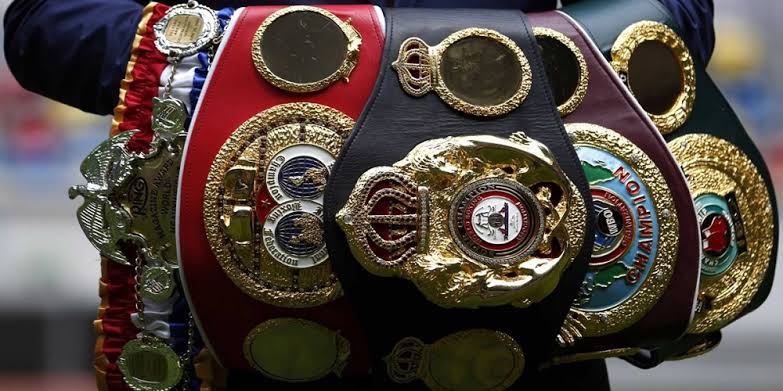
A WBA championship belt symbolizes recognition within the WBA system. Holding a WBA title does not automatically mean recognition by every other organization.
Rankings ideas
Sanctioning organizations typically publish rankings that influence who is positioned for title opportunities. Rankings are organizational tools, not universal fighter scorecards.
Mandatory challengers
Mandatory policies are designed to require champions to face designated contenders within organizational timelines. Negotiations, injuries and administrative decisions can affect how those policies play out in practice.
Why the WBA matters in title storytelling
Because of its NBA roots, the WBA is often described as part of boxing's longest continuous sanctioning tradition. Legendary champions across eras have been associated with WBA titles in historical accounts - figures such as Muhammad Ali, Sugar Ray Leonard and Roberto Durán appear in broader championship narratives without this site inventing title counts or fight-by-fight ledgers.
The WBA's importance also comes from coexistence: once multiple bodies recognized separate champions, fans, media and historians needed clearer language for unified and undisputed claims. WBA belts remain a frequent piece of those conversations.
Unified and undisputed explained >How the WBA differs in conversation - not as a ranking
Readers often ask which organization is "best." Boxing Organizations History does not rank sanctioning bodies. Differences that matter historically include founding period, how quickly a body's titles entered mainstream media language, and how other organizations' belts were treated in unification storytelling.
The WBA's distinctive note is lineage depth: NBA (1921) → WBA (1962). That does not make its titles automatically superior or inferior to WBC, IBF or WBO recognition in any given era.
Continue with other organizations
Return to the directory or open the comparison table for qualitative differences across history, rankings and unifications.
Explore Organizations